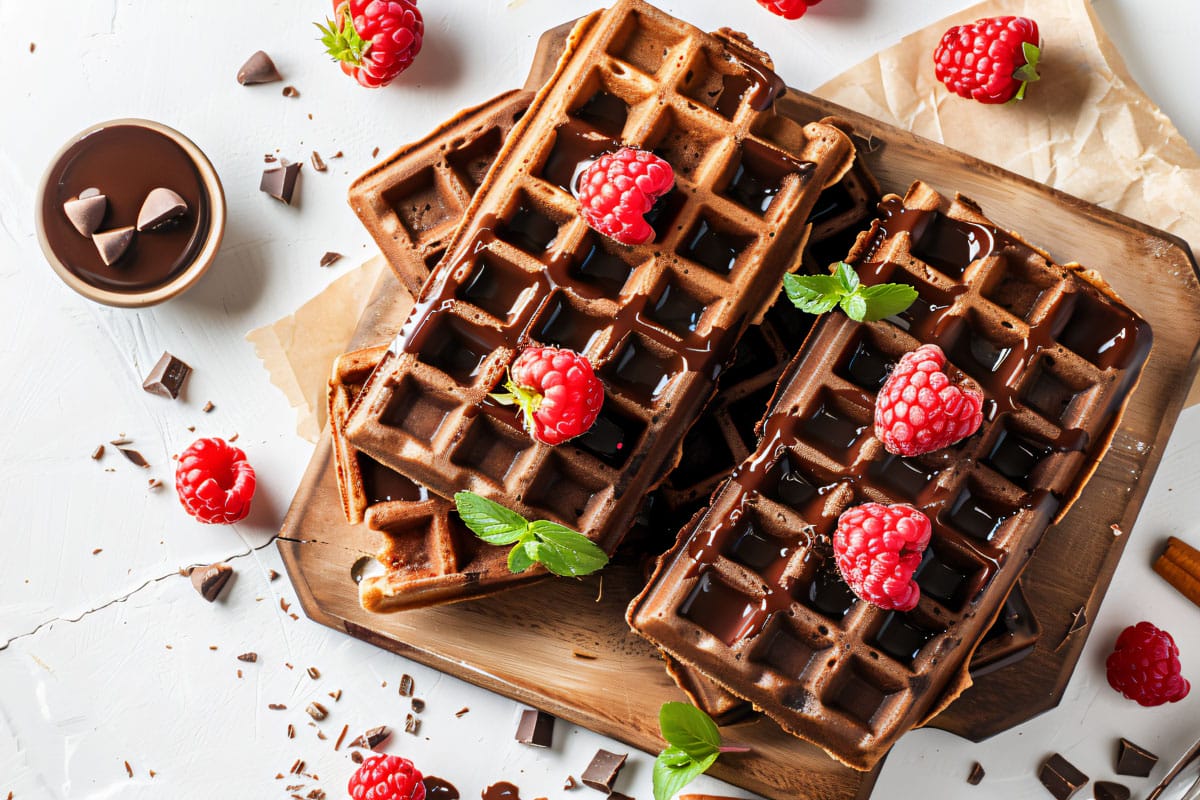
Belgian waffles captivate food lovers around the world. The distinctive honeycomb pattern has sparked curiosity for centuries. Golden squares filled with deep pockets hold a history dating back to the Middle Ages.
The structure of Belgian waffles was not created by chance. Each hole serves a specific technical and flavor purpose. Recipes have evolved over centuries, combining technology with culinary tradition. The honeycomb pattern has become the hallmark of the most prized baked goods.
The secret of the holes in Belgian waffles lies in the combination of history, language, and science. The Frankish word waffle gave the pastry its name. Medieval iron waffle irons created the pattern. The technology of cast-iron plates ensured even baking. Every element came together into a coherent whole of culinary tradition.
The origin of the word waffle and its connection to the honeycomb
The etymology of the word waffle passes through several European languages. The name reflects not only the appearance but also the method of preparing this traditional pastry. Beekeepers and craftsmen noticed a resemblance between its structure and natural forms found in nature.
The name reflects the visual character of the pastry. Beekeepers saw a similarity to their hives. The linguistic journey began in Frankish times.
The Frankish word wafla as the oldest root
The Frankish word wafla meant honeycomb or cake. The term appeared around the 8th century. The Franks noticed a similarity between pastries and hive structures. The word had two meanings depending on context.
Frankish tribes used simple cast-iron molds. The molds had geometric indentations resembling a honeycomb. Dough baked between plates created a distinctive pattern. The name naturally referred to bee architecture.
Linguists connect wafla with the concept of fabric. The Franks saw a resemblance to woven cloth. The honeycomb structure resembled a geometric fabric pattern. The word conveyed both appearance and structure.
Evolution of the name from medieval walfre to modern waffle
The French term walfre appeared in documents from 1185. It was the first written record of the name. Medieval France adopted Frankish terminology. The word spread to the Netherlands.
Dutch wafle emerged at the end of the 13th century. The Dutch language adopted the term from its medieval form. The name retained reference to honeycomb. Dutch bakeries developed baking techniques.
The Polish word gofr comes from French gaufre. The French form developed from walfre. The name underwent phonetic evolution over centuries. Modern Polish terminology preserves Frankish roots.
Main stages in the development of the name:
- 8th century: Frankish wafla meant honeycomb
- 1185: French walfre in written documents
- 13th century: Dutch wafle in Dutch language
- Modern times: Polish gofr from French gaufre
Each European language adapted the term to its own phonetics. The root of the word remained unchanged for centuries. Reference to honeycomb survived all transformations. The name is a living legacy of Frankish culture.
Where the Comparison to a Beehive Came From
The geometry of the honeycomb fascinated craftsmen. Bees created perfect hexagons from wax. Medieval furriers imitated natural forms. The pattern provided maximum capacity with minimal material.
The first waffle irons had rectangular grids. Craftsmen quickly noticed the benefits of deep indentations. The hive-like structure held toppings in place. Honey and syrups filled the pockets.
The comparison to a honeycomb became increasingly common. Medieval documents described cakes as honeycombs. The name reflected both form and function. The bee pattern became synonymous with baking quality.
Tip: Purchasing waffle irons with deep grids ensures an authentic Belgian honeycomb effect.
The History of Waffles from Antiquity to Modern Times
The origins of waffles date back to ancient Greece. The culture of baking cakes between metal plates developed over millennia across various continents. Ancient preparation methods laid the foundation for modern techniques.
Ancient civilizations baked dough between plates. The Romans refined their predecessors’ technique. The Middle Ages brought a revolution in waffle molds.
Greek Obleios and Roman Crustula as the Prototypes of Waffles
Ancient Greeks prepared obleios during Dionysian festivals. Bread was baked between two hot iron plates. They added olives or fresh figs. Religious celebrations required special baked goods.
The Roman panis obelius evolved from the Greek obleios. The Romans developed a sweeter version called crustula. They used flour, honey, and lard in preparation. Crustula were crispy biscuits enjoyed by patricians.
Crustularii sold baked goods on the streets of ancient Rome. They located near temples and places of worship. Teachers rewarded top students with crustula. Horace mentioned these baked goods in his satires.
The philosopher Pliny the Elder documented crustula preparation. Romans considered butter a cosmetic, not an ingredient. They used lard instead of butter for baking. Crustula served as desserts at banquets.
The First Waffle Irons with Honeycomb Patterns in the 13th Century
The 13th century brought a breakthrough in waffle technology. Craftsmen forged iron molds with geometric indentations. The honeycomb pattern appeared more frequently. Molds were heated over open flames.
Medieval waffle irons had long wooden handles. These allowed safe turning of molds over fire. Cast iron plates retained heat for a long time. The pattern was evenly imprinted on the dough.
Characteristics of Medieval Waffle Irons:
- Long wooden handles protecting against burns
- Cast iron plates with deep geometric indentations
- Honeycomb pattern as the most popular motif
- Heating over open fire or fireplace
- Heraldic decorations for noble families
The first written recipes date back to the 14th century. Guild bakers used molds bearing family crests. Each noble family had its own design. Honey served as the main sweetener in recipes.
Artisans recognized the advantages of deep grids. The batter baked more evenly than on flat molds. The outer layer was crispy, while the inside remained soft. The honeycomb pattern became a quality standard.
The Development of Waffle Baking Tradition in Medieval Europe
The 15th century introduced butter as an ingredient. It replaced the previously used animal fat. The flavor of waffles became more delicate. Recipes evolved across different regions.
The 16th century brought molds with deep squares. The depth of the grids increased significantly. Waffles became thicker and fluffier. Belgian regions developed their own styles.
Sugar became more accessible in the 18th century. Sweet versions of waffles gained popularity. Bakeries specialized in various recipes. Fairs and holidays required special baked goods.
The 19th century introduced yeast into the batter. The fluffiness of waffles increased many times over. Belgian cities competed for the best recipes. The baking tradition became a culinary art.
Legends about the Origin of Belgian Waffles from Liège and Brussels
Liège waffles were said to have originated in the 18th century according to legend. The Prince-Bishop of Liège commissioned a new dessert from his chef. The ruler demanded something sweet and tasty. The chef created waffles with sugar crystals.
Pearl sugar caramelized during baking. Sweet pockets created a unique flavor. Liège waffles had an irregular shape. The batter resembled a yeast dough in consistency.
Brussels waffles developed separately. Some sources point to Ghent in the 18th century. Pastry chef Maurice Vermersch presented the recipe in 1842. Brussels exhibitions popularized the bake.
The World’s Fair in Brussels in 1958 introduced waffles to the world. They were served with whipped cream and fruit. Subsequent fairs in Seattle in 1962 attracted crowds. The name Bel Gem was created for American customers.
Tip: Visit specialty stores selling pearl sugar to prepare authentic Liège waffles at home.
Technical Reasons for Using a Grid in a Waffle Iron
The geometry of grids in a waffle iron represents advanced engineering. The honeycomb pattern is not accidental but results from centuries of observations of thermal processes. Each hole was designed according to the laws of physics and culinary chemistry.
Every line and indentation serves a specific function. Thermodynamics explains the pattern’s efficiency. Material and shape create an ideal baking system.
Even Heat Distribution Across the Batter Surface
Cast iron has a crystalline structure called ferrite. Its molecular structure conducts heat efficiently. Thick walls of waffle irons absorb and store energy. Heat spreads evenly across the entire surface.
The cooling process of iron creates a granular structure. Grains contribute to heat distribution. Cast iron waffle irons eliminate hot spots. Every centimeter of the plate reaches the same temperature.
The ideal baking temperature ranges from 190 to 205 degrees Celsius. Cast iron maintains temperature despite adding cold batter. Thermal shock creates an instant crispy crust. Internal steam increases pressure beneath the surface.
Short bursts transfer heat directly to the dough. The geometry ensures maximum contact surface. Each hole receives an identical amount of energy. Even baking guarantees a consistent result.
The impact of cast iron plates on the crispiness of the outer layer
The mass of iron acts like a thermal battery. The dense metal retains a huge amount of heat energy. The temperature does not drop after adding the dough. A sudden heat transfer seals the outer layer.
Crispiness is created by an immediate reaction. Sugars in the dough caramelize instantly. Proteins coagulate, forming a rigid structure. Water evaporates from the surface quickly.
Comparison of waffle iron materials:
| Material | Heat Retention | Heating Evenness | Durability |
|---|---|---|---|
| Cast Iron | Very High | Excellent | Decades |
| Aluminum | Low | Average | 3 to 5 years |
| Stainless Steel | Medium | Good | 10 to 15 years |
Cast iron retains heat throughout the entire process. Internal steam pressure creates fluffiness. The outer layer remains crispy. The contrast of textures defines the perfect waffle.
The thickness of the cast iron plates affects the result. Thinner materials lose temperature too quickly. Aluminum does not provide such retention. Cast iron remains indispensable in professional waffle makers.
The role of grid geometry in shortening baking time
Deep grids increase the contact surface with the batter. More batter touches the hot metal simultaneously. Baking time is reduced by 30 to 40 percent. Energy transfers more efficiently through the grids.
The honeycomb geometry optimizes steam flow. Steam escapes through the gaps. Too smooth a surface traps moisture. The grids create natural drainage channels.
Rectangular indentations provide structural stability. The batter rises evenly in all directions. The symmetrical pattern prevents deformation. Every part of the waffle bakes identically.
The perimeter of the grids regulates batter flow. Selective narrowing controls mass distribution. Manufacturers adjust geometry to batter thickness. Pattern optimization shortens time by additional minutes.
Tip: Preheat cast iron waffle makers for 10 to 12 minutes before use, turning every 2 minutes for even heating.
Functional advantages of deep pockets in waffles
The depth of the grids goes beyond aesthetic function. The structure of the indentations directly affects the sensory experience when eating waffles. The architecture of the holes has been refined by generations of bakers.
Pockets serve practical culinary purposes. The architecture of the holes influences flavor and texture. Engineering meets gastronomy in every waffle.
Increased contact surface with the hot plate
Deep indentations enlarge the active baking surface. A flat form has limited contact with the batter. Grids increase contact area by 60 to 80 percent. More batter touches the cast iron plate simultaneously.
Each pocket wall transfers heat. Batter receives energy from both top and bottom sides. The side walls of the grids additionally heat the mass. Multidirectional transfer ensures full baking.
Belgian waffles have grids 1 to 1.5 centimeters deep. Brussels versions have 20, 24, or 28 holes. Liège waffles feature deeper, irregular pockets. Each style maximizes contact surface.
The increased surface accelerates chemical reactions. Sugars caramelize more intensely and evenly. Proteins form a stronger structure. The Maillard reaction occurs faster and more completely.
The perfect place to hold syrups and toppings
Pockets in waffles function like small reservoirs. Each hole holds 2 to 3 milliliters of liquid toppings. Maple syrup fills the grids without running off. The honeycomb structure maximizes juice retention.
The geometry of pockets prevents topping loss. Flat waffles allow syrups to run onto the plate. Deep indentations create natural barriers. Every bite contains a perfect portion of topping.
Popular toppings for Belgian waffles:
- Maple syrup from Canada or Vermont
- Creamy or vegan whipped cream
- Fresh seasonal fruits like strawberries or blueberries
- Melted dark or milk chocolate
- Vanilla or fruit ice cream
- Acacia or buckwheat honey
Brussels waffles are served with whipped cream. The pockets hold the cream and fruit. Melted chocolate fills the holes evenly. Ice cream melts more slowly in the deep grids.
Savory versions use the pockets similarly. Melted cheese collects in the indentations. Vegetable sauces fill the honeycomb structure. Each hole becomes a flavorful element.
Creating a crispy crust while keeping the interior soft
The deep grids create a thermal gradient. The outer layers heat up to 200 degrees. The interior reaches only 90 to 95 degrees. The temperature difference creates two textures.
The surface is in direct contact with cast iron. Immediate reaction caramelizes sugars. Water evaporates from the outer layer instantly. A crispy crust forms within the first seconds.
The pocket interior protects against excessive heat. Steam remains trapped inside. Starch swells due to moisture and temperature. The fluffiness of the interior contrasts with the crispy crust.
Belgian waffles are famous for their perfect contrast. The outer layer breaks under the teeth. The center melts gently on the tongue. The grid architecture enables this effect.
Tip: Serve waffles immediately after baking to preserve maximum contrast between the crispy crust and soft interior.
Ready mixes for making Belgian waffles at GOFREX store
Belgian waffles remain consistently popular in Poland. Their crispy surface and fluffy center attract customers in cafes, restaurants, and events. Preparing perfect waffles requires proper ingredients and proven recipes. GOFREX offers comprehensive solutions for food service entrepreneurs.
The store specializes in providing professional equipment and accessories for the food industry. The assortment includes high-quality products tailored to the needs of both small food outlets and large production facilities. The company focuses on proven solutions that simplify daily kitchen work.


Bubble Waffle Sweet Batter for Bubble Waffles 50kg


Ready-made Biscuit Dough for Waffles Classic | Belgian Waffles 50kg


Waffle preparation mixes
Gofrex online store offers a wide selection of ready-made mixes for baking Belgian waffles. These products have been developed with professional gastronomic use in mind. Simply add water or milk to achieve the perfect baking consistency.
The available mixes are easy to prepare, eliminating the need to weigh individual ingredients. The production process becomes faster and more efficient. Each batch maintains consistent flavor quality.
The assortment includes various flavor variants of mixes. Classic recipes work well in traditional waffles. Specialized versions allow for creating original culinary proposals. The products are suitable for use in Belgian waffle makers.
Professional waffle makers for preparing Belgian waffles
GOFREX offers devices designed for the food service industry. Belgian waffle makers stand out for their durable construction and efficiency. Single-chamber models are ideal for smaller sales points. Double-chamber devices increase production capacity for locations with higher customer traffic.
Electric waffle makers with varying power levels are available. The heating plates are made from non-stick materials. Baking temperature is precisely adjustable. The devices ensure even baking across the entire surface of the waffle.
The design of the devices facilitates daily use. The housings are made from stainless steel suitable for food service. Cleaning the plates is easy. Compact dimensions allow efficient use of kitchen space.
-

Professional waffle iron GOFREX GB-07
€ 712.90 Add to cart - -4%

Schneider Waffle Starter Set
Original price was: € 891.90.€ 854.90Current price is: € 854.90. Add to cart -

Waffle maker professional Schneider Belgian 1600W
€ 743.90 Add to cart
Comprehensive customer service at GOFREX
The company has been operating on the Polish market for many years. Experience in the food service industry translates into high-quality service. A team of specialists will advise on selecting the right products. Assistance covers both choosing mixes and baking devices.
We invite you to explore the full offer of the GOFREX online store. Orders can be placed directly through the website. If you have questions or need consultation, the team is available to assist you. Contact us to receive expert advice on selecting optimal solutions for your food service business.
Differences between Belgian and other types of waffles
Belgian waffles are divided into two main styles. Regional differences have developed over centuries of culinary practices in different parts of the country. The distinctive features of each style reflect local preferences and traditions.
Each region developed unique characteristics. The depth of the grids varies significantly between versions. Ingredients and techniques create different experiences.
Grid depth in Liège and Brussels waffles
Brussels waffles have a rectangular, symmetrical shape. They feature defined edges and even sides. The grid depth ranges from 1 to 1.5 centimeters. The pattern contains 15, 20, or 24 pockets.
Traditionally, Brussels waffles had 20 pockets arranged in a 4 by 5 layout. Contemporary versions offer various configurations. A 3 by 5 layout produces 15 pockets. Larger waffle makers create 24 pockets arranged 4 by 6.
Liège waffles are characterized by an irregular shape. The edges are uneven and organic. The pockets vary in depth and size. The average depth exceeds that of the Brussels version.
Brussels waffles have deeper grids than American ones. American waffles have shallower indentations. The difference reaches 40 to 50 percent in depth. Belgian tradition prefers maximum pocket capacity.
The Impact of Yeast Dough on Pocket Structure
Brussels waffles use yeast dough mixed with milk. The yeast creates a light, airy structure. The dough rises during fermentation. Air bubbles increase the volume.
The airy consistency allows the batter to fill the grids. The yeast structure expands during baking. The pockets form tall and deep. A crispy crust surrounds a fluffy center.
Stages of yeast dough fermentation:
- Preparing a starter from yeast, milk, and flour
- First fermentation at 70 to 80 degrees Fahrenheit for 60 minutes
- Kneading the dough with butter and eggs
- Second fermentation for 30 to 45 minutes
- Optional fermentation in the refrigerator for 24 hours
Liège waffles use a thicker yeast dough. The consistency resembles brioche dough. The texture is denser and heavier. The yeast works slower due to the higher density.
Yeast dough forms an elastic gluten network. Gluten stretches during rising. Pockets maintain their shape after baking. The structure remains stable after cooling.
The Role of Pearl Sugar in Caramelization and Bake Texture
Pearl sugar consists of irregular lumps larger than regular sugar. Size C40 is considered the Belgian standard. Crystals do not completely dissolve during baking. They partially melt on the waffle’s surface.
The caramelization process occurs at 320 to 356 degrees Fahrenheit. The outer layer of sugar melts and browns. The inside of the crystal retains a crunchy texture. The contrast in textures enriches every bite.
The pockets fill with caramelized sugar. Sweet pockets create intense flavor spots. Each hole contains at least a few lumps. Melted sugar forms a toffee-like layer.
Caramelization gives a golden color. Sugar lumps create shiny spots. The visual effect draws attention. Caramel flavor dominates without added syrups.
Tip: Buy Belgian pearl sugar in size C40 for an authentic Liège waffle taste and texture.
Summary
Belgian honeycomb-patterned waffles combine history with science. The Frankish word waffle gave its name reflecting the structure. Medieval waffle irons from the 13th century created the distinctive pattern. Cast iron plates ensured even heat distribution and perfect crispness.
Deep pockets serve many practical functions. They increase contact surface with the hot plate. They hold syrups and toppings without loss. They create contrast between crispy crust and soft interior. Differences between Liège and Brussels waffles show recipe evolution.
Pearl sugar in Liège waffles caramelizes during baking. Yeast dough creates a fluffy structure with deep holes. Belgian tradition combines technology with culinary craftsmanship. Every hole tells a story of centuries of waffle recipe refinement.
Sources:
- https://en.wikipedia.org/wiki/Waffle
- https://etymonline.com/word/waffle
- https://edition.cnn.com/travel/waffles-history-origins-ancient-rome-greece-belgium/index.html
- https://greekreporter.com/2025/01/22/the-origin-of-waffles-from-ancient-greece-to-your-breakfast-plate/
- https://ampi.be/en/article/history-and-origins-of-the-brussels-waffle-a-delicious-belgian-traditional-treat
- https://gofrex.com/en/historia-gofrow-od-sredniowiecza-do-wspolczesnosci/
- https://healthycliq.in/the-science-behind-cast-irons-perfect-heat-distribution/
- https://skeppshult1906.com/blogs/recipes/waffles-master-the-stovetop-cast-iron-for-ultimate-crispiness
- https://belgianyum.com/unlocking-flavors-how-yeast-and-pearl-sugar-transform-belgian-waffles/
- https://belgianyum.com/liege-vs-brussels-demystifying-belgiums-two-most-famous-waffles/
- https://magicflavours.com/chemistry/is-caramelizing-sugar-a-chemical-change/